
Invoice Posting Automation – Case Study
JW Construction is a company executing complex projects that generate a large number of cost invoices. The client's problem was the posting process:

JW Construction is a company executing complex projects that generate a large number of cost invoices. The client's problem was the posting process:

Automatic document exchange between ERP systems via EDI (Electronic Data Interchange) has been the foundation of logistics and finance processes in many large companies for years. However, the introduction of the National e-Invoice System (KSeF) forces fundamental changes in this area. The new system means the necessity to send every

The long-announced update of the structured invoice format – FA(3) – has come into effect. The new version, developed by the Ministry of Finance, expands invoicing technical capabilities, including support for attachments, QR codes, and fields supporting emergency mode (offline24).
The introduction of the National e-Invoice System (KSeF) in Poland is associated with a revolution in the approach to electronic invoicing and data exchange between taxpayers and the tax administration. Although much attention focuses on sending invoices to KSeF, much less space is devoted to handling incoming invoices.

Fast and secure invoice transmission determines companies' financial liquidity; access tokens in KSeF 2.0 serve as the key to the Ministry of Finance system gateway.

Integration with the National e-Invoice System (KSeF) requires not only technical connection to the Ministry of Finance interfaces but also responsible management of access to these services. At the center of this issue are two key elements: qualified certificates and KSeF access tokens. Their proper
Is your organization ready for mandatory e-invoicing using the National e-Invoice System (KSeF)? If you use SAP, implementing the appropriate integration solution becomes not only an option but a necessity.
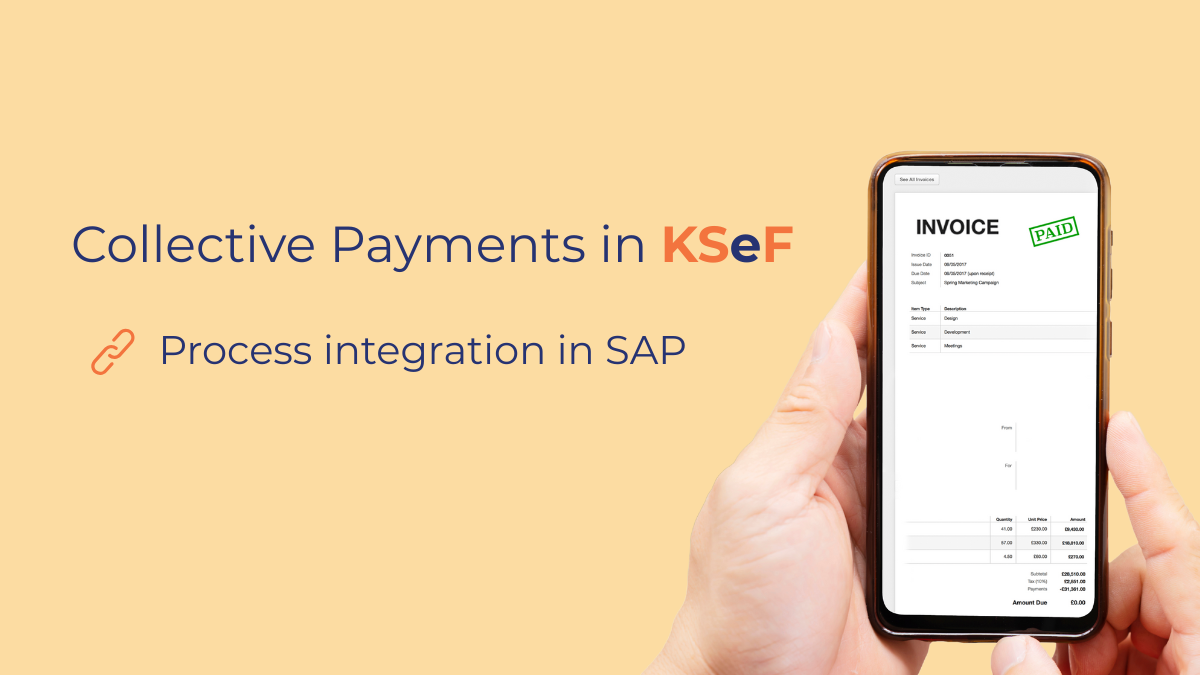
KSeF collective payments in SAP is a topic gaining importance in the context of ERP system integration. As ERP systems adapt to new realities of electronic invoicing, one challenge is effective integration with the National e-Invoice System (KSeF) – especially regarding collective payments.

The National e-Invoice System (KSeF) is one of the key changes in the digitization of tax processes in Poland. The upcoming KSeF 2.0 version and mandatory e-invoicing from 2026 will introduce significant changes for both large enterprises and smaller business entities. For many companies using
The National e-Invoice System (KSeF) is the Ministry of Finance's central platform for issuing and sharing structured invoices, i.e., e-invoices in XML format compliant with the defined logical structure. The system was created as part of digitizing tax settlements to facilitate invoicing for companies and
The introduction of the National e-Invoice System (KSeF) has revolutionized how Polish companies manage accounting documentation. One key element of this system is preliminary posting in KSeF, which enables automatic processing of data from invoices received in the KSeF system and their preparation.

The National e-Invoice System (KSeF) is one of the most important digitization projects in the Polish tax system. It changes not only the way invoices are issued but also affects the organization of financial and accounting processes, document flow, and the technical architecture of ERP systems. Integration with KSeF in the SAP environment
The introduction of the National e-Invoice System (KSeF) has revolutionized the way invoices are issued and sent in Poland. For companies using ERP systems, especially SAP, it is crucial to understand when an invoice is considered sent in KSeF to ensure compliance with regulations and avoid potential penalties. The article

The National e-Invoice System (KSeF) is a platform that introduces standardization in issuing and receiving invoices in Poland. For companies using SAP, understanding and correctly filling in fields in KSeF is key to ensuring compliance with regulations and effective financial documentation management. The article
The National e-Invoice System (KSeF) is the Ministry of Finance's platform that enables issuing, receiving, and archiving structured invoices. Although the document transmission process is electronic, many users – both entrepreneurs and accountants – ask one basic question regarding
Limitations of the KSeF system pose a significant challenge in implementing the National e-Invoice System (KSeF) in Poland. The KSeF system is a key element of digitizing tax processes in Poland. Its goal is to simplify and standardize invoice circulation through mandatory use of structured invoices. Although the con
With the introduction of the National e-Invoice System (KSeF), the invoicing process in Poland will undergo a thorough change. The new rules mean not only the need to comply with legal requirements but also with specific technical standards – especially for companies using ERP systems such as
The amendment to the Act concerning the National e-Invoice System (KSeF) introduces significant changes aimed at simplifying the implementation of the mandatory electronic invoicing obligation. The changes result from public consultations conducted by the Ministry of Finance with entrepreneurs from February to July 2024, which
The ability to send e-invoices with attachments will be an additional functionality of the KSeF system. In this respect, the Ministry of Finance has listened to entrepreneurs' requests. Check how this solution will work.
The new FA(3) logical structure responds to entrepreneurs' requests. Check what changes have been introduced and who can benefit.

It's time for the final consultations on the National e-Invoice System (KSeF), which will become mandatory for all entrepreneurs in 2026. It's worth recalling how the consultations organized by the Ministry of Finance have proceeded so far and what changes were discussed at each meeting stage.

In the world of modern accounting, advisory, and auditing services, implementing the National e-Invoice System (KSeF) becomes a necessary step to ensure compliance with regulations and increase operational efficiency. Crowe Poland, a company providing a wide range of services – from accounting outsourcing to consulting

In the face of dynamic legal changes and the growing need for automation of financial processes, more and more companies in Poland are deciding to implement the National e-Invoice System (KSeF). In the medical and pharmaceutical industry – where precision, regulatory compliance, and operational efficiency are key – KSeF integration

This article presents a Case Study: KSeF SAP Implementation for JWC, a leader in the real estate market. The implementation of the National e-Invoice System (KSeF) integrated with the SAP system allowed JWC to optimize invoicing processes and increase compliance with current legal requirements. Case Study of KSeF implementation

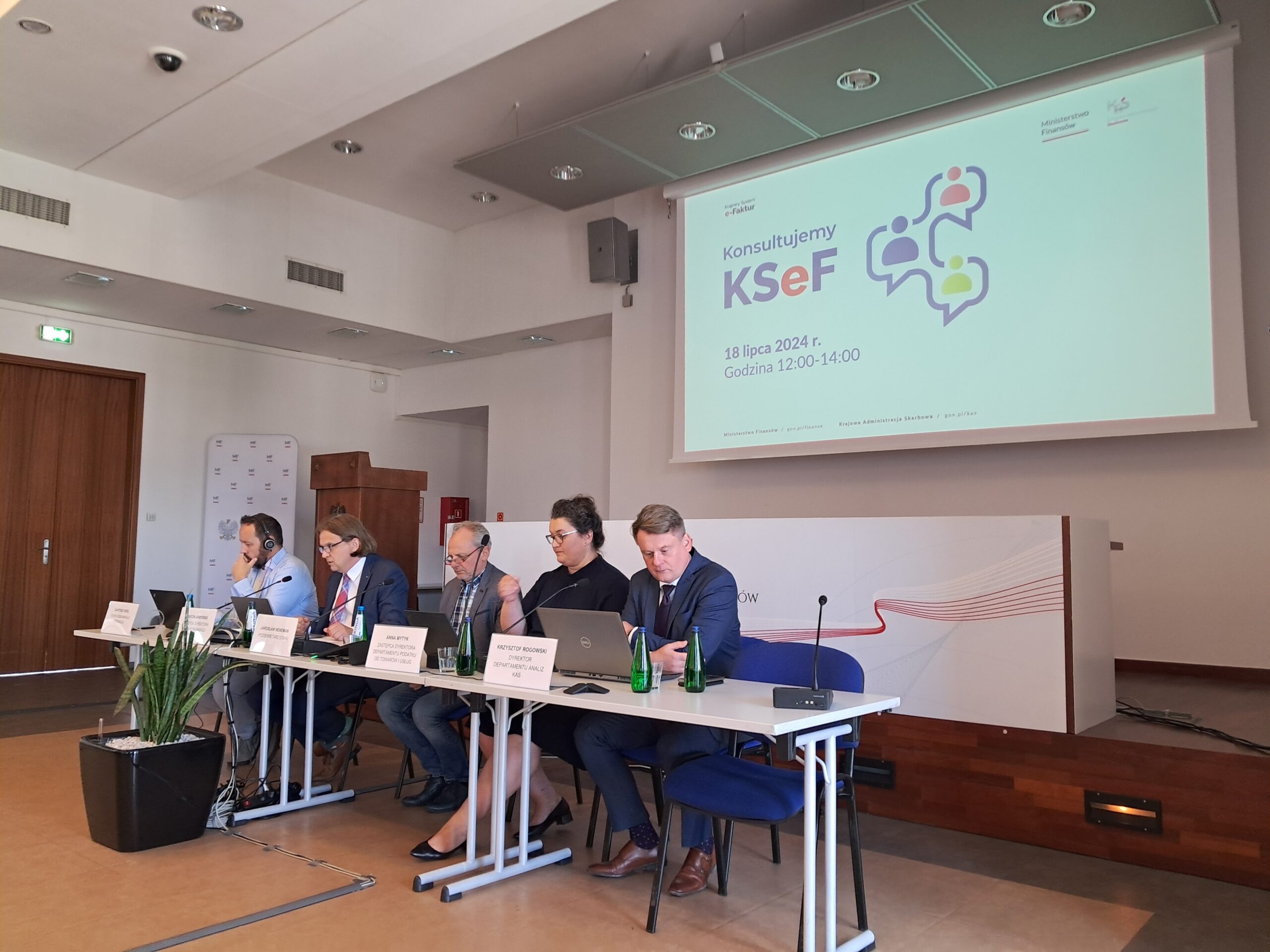
On July 18, 2024, another consultation meeting dedicated to the National e-Invoice System (KSeF) was held at the Ministry of Finance. The meeting was organized by the Ministry of Finance and the National Revenue Administration (KAS). Participants had the opportunity to review the results of the previous pre-consultations and to

In February 2024, consultations on the National e-Invoice System were held at the Ministry of Finance. Check what challenges entrepreneurs face when implementing KSeF and how to avoid them.

The Ministry of Finance has released important information about mandatory KSeF. This is the outcome of consultations with entrepreneurs at the Ministry of Finance. See how e-invoices will change.

Recently, significant changes have appeared in the Polish tax system concerning VAT refunds, which will certainly attract the attention of entrepreneurs and tax authorities. The new regulations, introduced by amending Article 87 of the VAT Act and the Code of Administrative Procedure, aim to streamline the refund process.

The SAP system can be easily integrated with the National e-Invoice System. This will enable automatic sending of e-invoices to KSeF.

Minister of Finance Andrzej Domański announced that mandatory KSeF will not be implemented in 2024; KSeF has been postponed. Find out what will happen next with the National e-Invoice System.

In the digital era, automating administrative processes has become essential for business growth. In Poland, the National e-Invoice System, known as KSeF, plays a key role in streamlining invoicing procedures. Setting up your first KSeF account in SAP may seem challenging, but don’t worry – we are here to help you.

Let's examine the draft amendments to the VAT Act and the National e-Invoice System (KSeF), aimed at adapting e-invoice regulations, including in SAP, to new digital realities. Specifically, we focus on changes to Article 31a of the VAT Act and Article 86, which will introduce facilitation for taxpayers.

In the era of digital revolution, even the most established fields, such as taxes and customs, are not immune to transformation. But what do these changes mean for SAP KSeF users? Is the e-Invoice what you currently need?

Implementing KSeF means mandatory e-invoices for foreign contractors. Check what obligations this entails and how to send such invoices using SAP with KSeF.

Soon every entrepreneur in Poland will face the necessity to use the National e-Invoice System (KSeF), i.e., to implement KSeF in their company. This will affect the way invoices are issued and received, inevitably resulting in additional expenses.

KSeF · KSeF SAP · e-Invoice · National e-Invoice System · KSeF


Facing upcoming changes regarding KSeF in SAP, the question arises how manufacturing companies using SAP and EDI can adapt their operations to the new legal obligation. One key aspect of this adaptation is EDIFACT – the standard for electronic exchange of logistics data in SAP.

Mistakes are human. The most important thing is to correct them. The same applies to invoices. In case of an error, a corrective invoice can be issued. This option is also available when issuing invoices in KSeF.

Mandatory KSeF allows tax authorities to impose financial penalties. Check when these sanctions are scheduled to come into effect.

Payments in foreign currency are common in many companies. This applies to both purchase and sales invoices. Does the National e-Invoice System provide the possibility to issue invoices in foreign currencies?

Until the end of 2023, using the National e-Invoice System is completely voluntary. Structured invoices will become mandatory from July 1, 2024. However, this will not apply to all invoices. Check what the exceptions are.

Software vendors have appeared on the market supporting entrepreneurs in implementing KSeF. What should you pay attention to in order to choose the best solution for yourself?

The National e-Invoice System enables issuing and sharing structured invoices. It will soon be introduced in Poland, but in other European countries this system is already functioning well. How is the development of electronic invoices progressing in Europe? Each country is at a different stage of implementation.

We present the most frequently asked questions about the new invoicing system KSeF in SAP. We hope the answers we prepared will dispel any doubts of new system users and help familiarize with the process of sending and receiving e-invoices in SAP.

The new government invoicing system, KSeF, introduced in 2022, raises many questions. Currently, the National e-Invoice System in SAP is optional, but soon it will become mandatory, so it is worth clarifying issues that cause doubts.

From 2024, there will be a universal obligation to issue e-invoices online, including in the SAP system. The National e-Invoice System is coming, bringing major changes to accounting organization in every company. This novelty will have to become everyday reality for many entrepreneurs.

On the internet, economic portals, and government websites, many questions and discussions have appeared regarding the new invoicing system – KSeF. Is it really more convenient than the traditional one? Among online communities, opinions have emerged that it will cause many difficulties and obligations for companies.

Regardless of industry and business activity, every entrepreneur must face upcoming changes. The digitization process is happening in every business sector. It has already affected accounting and bookkeeping, and this year also invoicing.